Cannonball Skeleton Pool Splash Print: A Designer's Review
As someone who spends more time staring at stitch maps than most people care to admit, I approach every new machine embroidery design with a mix of excitement and skepticism. We have all been there: you download a file that looks vibrant on the screen, only to watch it turn into a bird's nest of thread on your hoop. That is why I took a close look at the Cannonball Skeleton Pool Splash Print before committing it to any client projects or personal handmade products. This isn't just about whether the image is cute; it is about whether it holds up under the needle.
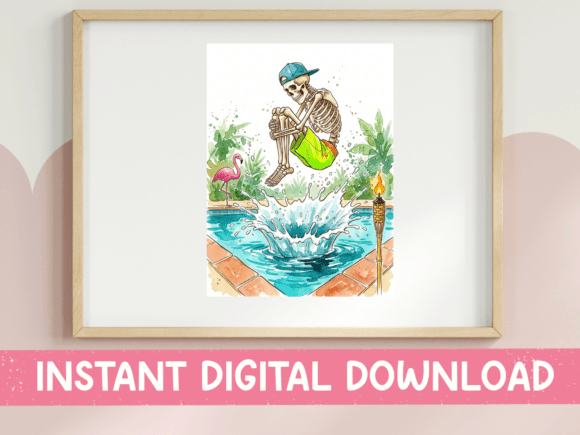
The first impression of this graphic is undeniably fun. The concept of a skeleton in a blue ball cap and lime green swim shorts launching into a tiled pool captures a specific summer mood—playful, slightly edgy, and perfect for warm-weather apparel. However, translating a "watercolor" style aesthetic into an embroidery file is notoriously tricky. Watercolor effects rely on soft blends and transparency, whereas embroidery relies on distinct blocks of color and defined stitch paths. My initial concern was whether the splash effect would lose its energy and become a muddy mess of overlapping threads.
Visual Personality and Stitch Execution
Upon inspecting the digitizing quality, the Cannonball Skeleton Pool Splash Print shows a thoughtful approach to converting complex graphics into stitchable art. The skeleton figure itself appears to utilize a combination of fill stitch for the bones and shorts, likely paired with satin stitch outlines to define the edges against the background. This contrast is crucial. Without those defining satin borders, the lime green shorts could easily bleed visually into the blue water elements, especially on textured fabrics.
The "huge water splash" is the make-or-break element here. In a low-quality digitization, splashes often look like random noise. In this design, the flow seems directional, mimicking the physics of a cannonball entry. For an embroidery project, this means the stitch direction likely follows the motion of the water, which adds dynamic movement to the finished product. The inclusion of the pink floatie beside the skeleton adds a necessary pop of contrasting color, breaking up the cool blues and greens and giving the eye a place to rest.
Real-World Application: The Summer Tote Scenario
To truly test the viability of this design, I imagined a real-life scenario: creating a limited run of custom tote bags for a local beach boutique. Tote bags are popular small shop products, but they present challenges due to their canvas texture and potential for stretching. If I were to use the Cannonball Skeleton Pool Splash Print here, the durability of the stitch density would be paramount.
For a tote bag design, the skeleton's limbs and the cap brim need to be robust enough to withstand being tossed around in a car trunk or stuffed with wet towels. The design's layout seems compact enough to fit standard hoops, but the detail level suggests it would shine best on a medium-to-large hoop size to prevent crowding. On a heavy canvas, the fill stitches should sit nicely on top of the fabric rather than sinking in, provided the correct stabilizer is used. A cut-away stabilizer would be my go-to recommendation here to ensure the design doesn't pucker after repeated washes.
Beyond totes, this graphic screams sweatshirt embroidery for those cooler summer evenings or transitional fall days. Imagine a heather grey hoodie with this bright, colorful skeleton on the back or chest. The contrast between the muted grey fabric and the vibrant lime and blue threads would make the design pop, creating a high-value custom apparel piece that customers would actually want to wear. It moves beyond a simple novelty item into something that feels like legitimate boutique branding.
Navigating Fabric Challenges and Limitations
While the design is strong, practical application requires caution. Not every surface is friendly to detailed graphics. If you are planning to use this on a cap, you must consider the curved surface. The tiled pool background and the water splash contain horizontal lines that could distort when stitched over the front panel of a hat. Unless the digitizer has specifically created a version for caps, I would advise sticking to flat garments like t-shirts, aprons, or pillow covers.
Similarly, fabric texture plays a massive role. On a fluffy towel or a thick bathrobe, the finer details of the skeleton's face or the tiles in the pool might get lost. The thread colors need sufficient contrast against the base material. While the design includes a white skeleton, placing it on a white or very light pastel fabric might result in a lack of definition unless a dense underlay or backing is utilized. Conversely, on dark navy or black fabrics, the lime green and pink elements will stand out brilliantly, but you must ensure the white bones are stitched densely enough to prevent the dark fabric from showing through.
Another consideration is the stitch density. Watercolor-style designs can sometimes be over-digitized with too many layers of thread to achieve shading. If the density is too high, the design becomes stiff and board-like, which is uncomfortable on baby clothes or wearable items. Before running a production batch, it is essential to stitch a sample on scrap fabric of the same weight as your final product. Check the back of the hoop as well; excessive jumping or long trims can complicate the finishing process, especially if you are making an embroidered patch that needs a clean backing.
Commercial Viability and Brand Consistency
For Etsy sellers and creative entrepreneurs, the visual appeal of a design directly impacts buyer engagement. The Cannonball Skeleton Pool Splash Print has a distinct personality that fits well within current trends favoring quirky, retro-inspired summer vibes. It works exceptionally well for holiday embroidery related to Memorial Day, Fourth of July, or end-of-summer sales. However, consistency is key. If your brand focuses on elegant, minimalist florals, this bold, cartoonish skeleton might clash. But for shops specializing in fun, family-oriented, or novelty Graphics, it is a perfect fit.
When marketing this as a personalized gift, consider how it pairs with text. The design leaves some negative space around the splash and the pool tiles, which could accommodate a monogram or a short phrase like "Summer Vibes" or a family name. However, be wary of adding tiny lettering near the detailed water elements; the text might compete with the splash for attention. Testing the design in black and white mockups can help you judge the balance between the graphic and any added typography.
Final Verdict and Designer Notes
In conclusion, the Cannonball Skeleton Pool Splash Print is a promising asset for the right project. It brings a lively, narrative quality to T-Shirt Designs and home decor that generic clip art often lacks. To ensure success, always verify the specific file formats and hoop requirements provided by the seller, as these details dictate machine compatibility. Remember to check licensing terms carefully; while many files allow for commercial use on finished physical goods, reselling the digital file itself is usually prohibited.
Before launching your next craft business collection with this design, follow these practical steps:
- Test on Scraps: Always stitch a sample on the exact fabric type you intend to sell.
- Check Contrast: Ensure the thread colors stand out against your chosen garment color.
- Review Density: Feel the back of the stitch-out to ensure it isn't too stiff for wearables.
- Stabilizer Selection: Match your stabilizer to the fabric stretch and weight.
- Inspect Details: Look closely at the small tiles and the skeleton's fingers to ensure they stitch out cleanly without breaks.
By treating this digital embroidery file with the respect and testing it deserves, you can transform a simple graphic into a standout handmade product that resonates with customers and stands the test of time and washing.